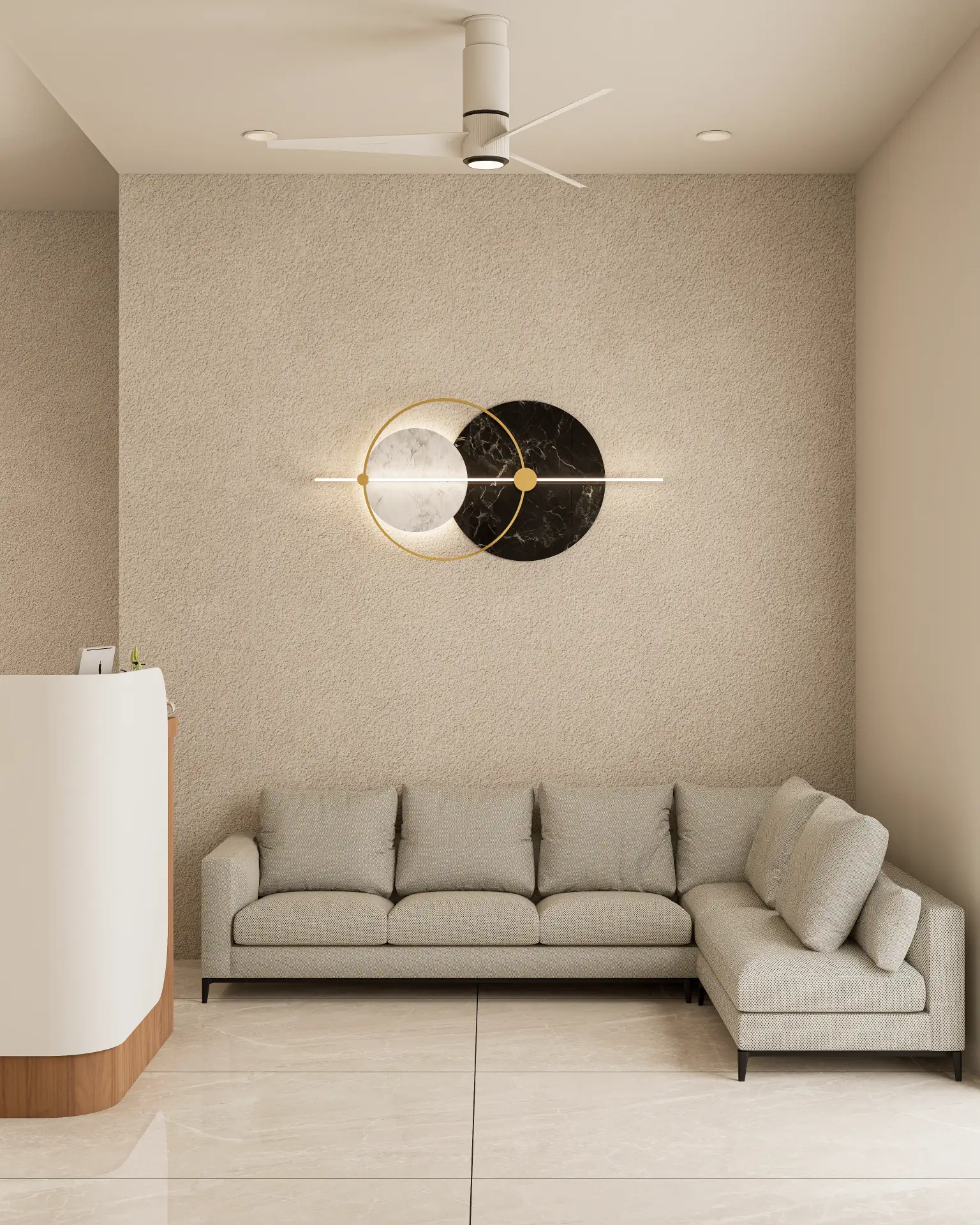
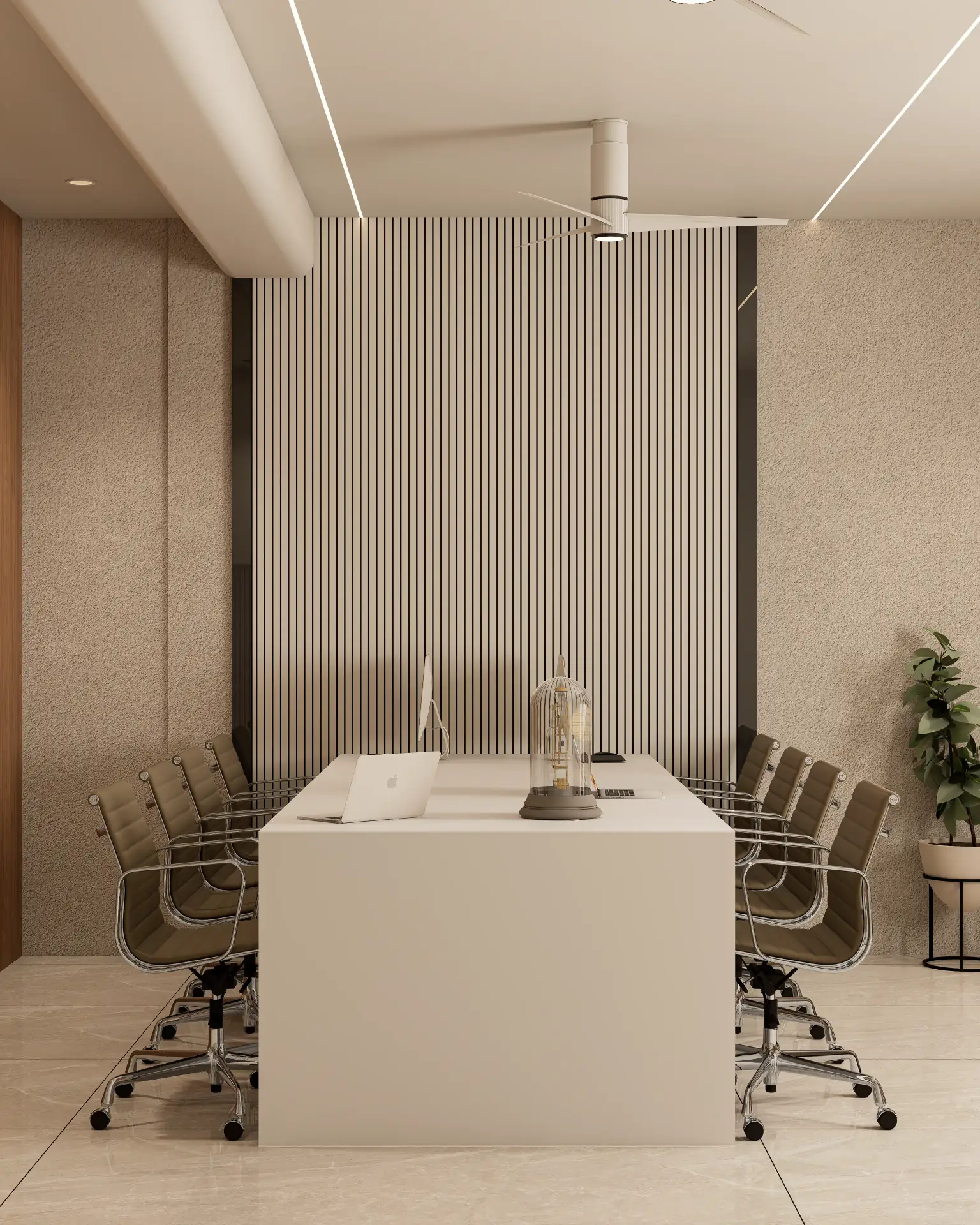
The prevalent issue in many ceramic and sanitaryware showrooms across Morbi is not a lack of product quality, but a fundamental failure in spatial articulation and material communication. Generic displays, often relying on simple grid layouts and inadequate lighting, actively diminish the perceived value of high-grade porcelain, glazed stoneware, and advanced sanitaryware. This spatial dissonance directly obstructs the ability of manufacturers to secure lucrative global B2B export contracts, as discerning international buyers require an immediate, undeniable demonstration of product excellence and application potential.
The Core Spatial & Technical Problem: Underestimating the Global B2B Gaze
The challenge extends beyond aesthetics; it is a critical technical and psychological barrier. When a high-volume B2B buyer from Europe, North America, or the Middle East walks into a Morbi showroom, their evaluation is immediate and unforgiving. They are not merely looking at a tile; they are assessing its installation feasibility, long-term durability, aesthetic consistency across hundreds of square meters, and the manufacturer's attention to detail. A showroom that presents 1200x2400mm sintered porcelain slabs with visible grout lines exceeding 1.5mm, or where the ambient lighting distorts the true color temperature of a 4000K LED-lit bathroom vanity, inadvertently signals a lack of precision. This directly undermines confidence in the entire supply chain. The problem is a systemic underestimation of the technical sophistication required to display materials that are inherently technical themselves.
We've observed this repeatedly, even in well-intentioned spaces. The sheer scale of modern large-format tiles, often 3200x1600mm or even larger, demands structural integrity and installation precision far beyond what a typical retail display can accommodate. Sanitaryware, particularly smart toilets and advanced shower systems, requires intricate MEP integration that must be demonstrably functional, not merely decorative. The absence of this integrated technical storytelling is the primary inhibitor to converting showroom visits into substantial export orders.
Mathematical, Geometric & Material Physics Solutions: Engineering Perception
Our approach at Craft - The Design Studio is rooted in engineering the perception of quality through precise technical application. This begins with rigorous geometric planning and a deep understanding of material physics.
- Precision Display Geometry: For large format tiles (e.g., 3200x1600mm, 12mm thick porcelain slabs), the viewing distance and angle are paramount. We calculate optimal sightlines to eliminate parallax distortion and ensure the full visual impact of veining and texture. A 3-meter viewing distance often necessitates a display angle of 85-87 degrees from the horizontal to minimize glare and maximize surface appreciation. In projects like our Office Design in Morbi, we applied similar principles for showcasing architectural finishes.
- Light Physics & Chromatic Fidelity: Lighting is not merely illumination; it is a critical tool for revealing material truth. We specify LED fixtures with a minimum Color Rendering Index (CRI) of >90 and a color temperature of 4000K-5000K for general display areas, shifting to warmer 3000K accents for lifestyle vignettes. For highly polished tiles with a reflection coefficient upwards of 90%, we employ indirect lighting, linear grazers, and carefully positioned spotlights to highlight texture without creating blinding hotspots. For ceramic glazes, understanding the Index of Refraction (IOR), typically around 1.56, guides our light placement to prevent unwanted specular reflections that obscure intricate patterns or color variations. Illumination levels are calibrated to 800-1000 lux in primary display zones, ensuring every detail is visible without harshness.
- Substrate Engineering for Dimensional Stability: Display walls for large format panels are not merely partitions. They are engineered structures. We mandate steel stud framing (minimum 1.2mm gauge) or solid blockwork, meticulously skim-coated to achieve a flatness tolerance of 1mm over 2 meters. This precision is critical for maintaining an imperceptible 0.5mm to 1.0mm epoxy grout gap, a standard expected by European and American markets. For floor displays, self-leveling compounds are non-negotiable, ensuring a deviation of no more than 2mm over 3 meters across the entire showroom floor.
- Material Science in Application: The choice of adhesive is as critical as the tile itself. For large format porcelain, we specify polymer-modified cementitious adhesives classified as C2TE S1 or S2 (flexible, extended open time, reduced slip). For wet areas in sanitaryware mock-ups, epoxy adhesives are mandatory for superior bond strength and chemical resistance. Grout is exclusively high-performance epoxy-based, selected for its stain resistance, chemical inertness, and minimal water absorption, crucial for showcasing hygienic sanitaryware applications.
Structural Trade-Offs & Alternative Comparisons: Informed Decisions for Export Readiness
Every design decision involves a trade-off, particularly when balancing initial investment against long-term operational efficiency and B2B appeal.
- Plywood vs. Aluminum Framing for Display Panels: While marine-grade plywood (18mm) offers a lower initial cost for display panels, its dimensional stability is susceptible to Morbi's humidity fluctuations, potentially leading to warping and visible grout line inconsistencies over time. Aluminum extrusion systems, though 25-30% more expensive initially, offer superior rigidity, lighter weight, and inherent resistance to moisture and thermal expansion. For a showroom targeting international B2B, the structural integrity and longevity provided by aluminum framing are a non-negotiable investment, ensuring a consistently flawless presentation for years.
- Italian Marble vs. Sintered Porcelain: For reception counters or feature walls, true Italian marble (e.g., Statuario or Carrara) offers unparalleled natural beauty but comes with significant cost, maintenance, and susceptibility to etching. Sintered porcelain slabs (e.g., 12mm thick, 3200x1600mm), mimicking these natural stones, offer superior Mohs hardness (6-7 vs. 3-4 for marble), zero porosity, and chemical resistance, all at a fraction of the cost and with minimal maintenance. From a B2B perspective, showcasing sintered porcelain in such applications demonstrates the manufacturer's own product capabilities and their commitment to durable, high-performance solutions. We often guide clients towards this practical luxury, as seen in conceptual works for Golden Heights and Silver Heights.
- Traditional Blockwork vs. Drywall Systems for Partitioning: For internal partitions, traditional brick or AAC blockwork offers robust sound insulation and thermal mass, but its construction speed and the precise finishing required for large format tile application can be time-consuming. Drywall systems (e.g., double-layer gypsum board on metal studs) offer faster installation and easier integration of services, but require careful acoustic treatment and reinforcement for heavy displays. The choice depends on specific area requirements – blockwork for perimeter walls or high-impact structural displays, and engineered drywall for flexible, rapidly reconfigurable display zones.
Failed Prototypes & Real Site Lessons: The Scars of Innovation
Innovation is rarely a clean process. Our journey in commercial showroom interior design Morbi has been paved with invaluable lessons learned from prototypes that didn't meet our stringent standards. One significant learning curve involved a large-format tile display wall for a client's export-focused showroom. We initially specified a standard 1.0mm cementitious grout with a flexible additive.
The Failure: Within six months, hairline cracks appeared, and some edge chipping occurred due to microscopic substrate movement and insufficient grout flexibility for such expansive panels. The aesthetic integrity, crucial for B2B perception, was compromised. The cementitious grout, despite additives, absorbed moisture, leading to subtle discoloration that was immediately noticeable under high-CRI lighting.
The Lesson: This led to our absolute mandate for 0.5mm to 1.0mm epoxy grout for all large-format tile applications in export-oriented showrooms. We now insist on a 1.5mm expansion joint every 6-8 linear meters, meticulously concealed, to accommodate thermal expansion and structural shifts. The initial cost saving on cementitious grout was far outweighed by the re-work and reputational risk. Furthermore, early attempts at using standard wall plasters for substrate preparation proved inadequate; we now mandate a two-coat polymer-modified skim coat for a uniform, perfectly flat surface capable of handling the adhesive bond for 12mm thick panels without telegraphing substrate imperfections. Our experience on projects like Sthapatya and Flora 11 reinforced the need for absolute precision in substrate preparation, even in residential contexts where tolerances might seem less critical.
Non-Negotiable Site Tolerances & Budget Thresholds: The Foundation of Quality
To achieve an export-ready showroom, certain parameters are non-negotiable. Compromising on these will inevitably lead to a diminished perception of quality and hinder B2B conversion.
- Structural Flatness: For any surface receiving large-format tiles (above 600x1200mm), the substrate flatness must be within a 1mm deviation over 2 linear meters. For floors, 2mm over 3 linear meters. This requires laser-leveling and the application of self-leveling compounds or precision skim coats.
- Environmental Control: A stable environment is crucial for both product preservation and visitor comfort. We mandate HVAC systems capable of maintaining a consistent temperature range of 22-24°C and relative humidity of 50-60%. This prevents material expansion/contraction and creates an optimal viewing experience.
- Electrical & MEP Accuracy: All electrical points for lighting, smart sanitaryware, and interactive displays must be within a 5mm positional tolerance. Drainage slopes for live shower/toilet mock-ups must be a precise 1:100 to ensure proper water flow and prevent pooling, preventing potential embarrassment during a live demonstration.
- Minimum Budget Threshold: While every project is unique, achieving a truly high-impact, export-quality showroom in commercial showroom interior design Morbi typically requires a minimum fit-out budget of ₹2,500/sq ft for basic, functional displays, escalating to ₹4,000/sq ft and above for truly immersive, technologically advanced experiences incorporating custom fabrication, advanced lighting controls, and interactive elements. This threshold accounts for the specialized labor, high-performance materials, and precision engineering required. Anything significantly below this risks compromising the core objective of B2B export readiness.
How to Execute with Craft - The Design Studio: Your Partner in Global B2B Excellence
At Craft - The Design Studio, with our deep roots in Morbi and Rajkot, we understand the unique dynamics of the ceramic and sanitaryware industry. Our expertise, honed through projects like Twin Tower (both residential and commercial visualizations) and the detailed planning for Office Design, positions us as your ideal partner for creating showrooms that resonate with global buyers.
Our process is meticulously structured:
- Initial Technical Consultation: We begin with an in-depth analysis of your product line, target B2B markets, existing facility limitations, and export objectives. This is not a casual meeting; it is a deep dive into your material specifications, manufacturing processes, and logistical capabilities.
- Concept & Feasibility Study: We develop preliminary spatial concepts, illustrating optimal display strategies, traffic flow, and critical technical integrations. This includes initial 3D visualizations and material palettes, providing a tangible vision for your commercial showroom interior design Morbi.
- Detailed Engineering & Design Development: This phase involves precise CAD drawings, MEP coordination, lighting schematics, structural calculations for display elements, and comprehensive material specifications. Every dimension, every lux level, every adhesive type is meticulously documented.
- On-Site Project Management & Quality Assurance: Our team provides rigorous on-site supervision, ensuring that every aspect of the design is executed to the exact specified tolerances and quality standards. We act as your technical representative, coordinating between contractors and suppliers to maintain project integrity.
- Post-Completion Review & Optimization: We conduct a thorough post-completion review, assessing the showroom's performance in terms of visitor engagement, product presentation, and functionality, offering insights for future optimization.
Do not let a poorly conceived showroom diminish the value of your world-class products. Partner with Craft - The Design Studio to transform your space into a powerful instrument for global B2B export success. Contact us today for a comprehensive technical consultation and begin the journey to an unparalleled commercial showroom interior design Morbi that truly represents your brand's global potential.